
Mini C-Arms are an essential imaging solution for orthopedic and surgical procedures, providing real-time visualization with lower radiation exposure and a smaller footprint than full-size C-arm systems. As flat detector technology has advanced, these systems have become more precise, more efficient, and better suited for outpatient clinics, surgery centers, and hospital environments focused on extremity imaging.
Within the Orthoscan lineup, the Orthoscan FD Mini C-Arm has long served as a benchmark for flat detector extremity imaging, offering dependable performance, ergonomic design, and strong overall value. To address more specialized clinical needs, Orthoscan later introduced the FD-OR, optimized for surgical workflows, and the FD Pulse, which incorporates pulsed fluoroscopy to further reduce radiation exposure.
In this article, we compare the Orthoscan FD Mini C-Arm to the Orthoscan FD-OR and Orthoscan FD Pulse, focusing on image quality, workflow efficiency, radiation management, and long-term value. This comparison is designed to help healthcare providers understand when the Orthoscan FD is the right choice – and when upgrading to a more advanced model makes sense.
Orthoscan FD Mini C-Arm Overview: Flat Detector Imaging for Everyday Use
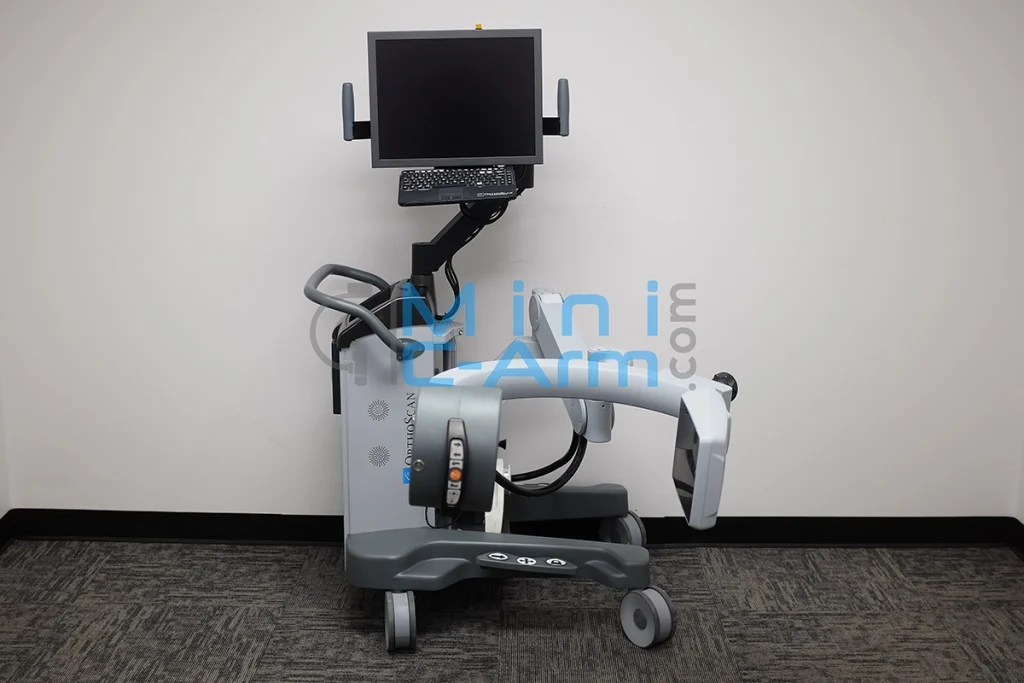
The Orthoscan FD Mini C-Arm was the first mini C-arm to introduce flat detector technology and remains one of the most widely used systems for extremity imaging. It was designed to deliver a practical balance of image clarity, low radiation dose, and ergonomic workflow without adding unnecessary complexity.
With its slim flat detector housing and lightweight design, the Orthoscan FD is easy to maneuver in tight operating rooms, outpatient clinics, and procedure suites. Sterile-field tube head controls allow clinicians to rotate, capture, save, and print images without breaking procedural flow. Combined with digital storage and DICOM connectivity, the FD supports efficient imaging and seamless integration into modern clinical environments.
Key features of the Orthoscan FD Mini C-Arm include:
- Flat detector imaging with 2k x 1.5k resolution
- Compact, lightweight design for easy positioning
- Sterile-field tube head controls for efficient workflows
- High-capacity image storage with USB export
- DICOM 3.0 compliance for PACS integration
For many facilities, the Orthoscan FD delivers all the imaging performance needed for routine extremity procedures at an accessible cost point.
For clinicians or technicians seeking detailed technical specifications, the Orthoscan FD Mini C-Arm Service Manual provides complete system guidance.
Orthoscan FD vs FD-OR vs FD Pulse: Mini C-Arm Feature Comparison
While the Orthoscan FD serves as the foundation of the lineup, the FD-OR and FD Pulse expand on this platform to address more specialized imaging requirements. The table below outlines how each system compares across core performance areas.
Orthoscan Mini C-Arm Comparison Overview
| Feature | Orthoscan FD | Orthoscan FD-OR | Orthoscan FD Pulse |
|---|---|---|---|
| Radiation Type | Continuous fluoroscopy | Continuous fluoroscopy | Pulsed fluoroscopy |
| Radiation Dose | Standard low-dose | Low-dose | Lowest (30–80% reduction) |
| Detector Size | 15 x 12 cm | 15 x 12 cm | 15 x 15 cm |
| Image Resolution | 2k x 1.5k | 2k x 1.5k | 1.5k x 1.5k |
| Best For | General extremity imaging | Surgical imaging | Dose-sensitive, frequent imaging |
| Workflow Focus | Simplicity and versatility | OR efficiency | Safety + advanced performance |
| Mobility | Lightweight, compact | Lightweight, OR-optimized | Lightweight |
| Key Advantage | Proven flat detector value | Ergonomic surgical design | Maximum radiation reduction |
The Orthoscan FD meets the needs of most extremity imaging environments, while the FD-OR and FD Pulse are designed for facilities with specific surgical or radiation priorities.
Imaging Performance Differences Among Orthoscan Mini C-Arms
All three Orthoscan systems deliver digital flat detector imaging, but they emphasize different strengths.
The Orthoscan FD Mini C-Arm provides consistent, high-resolution images suitable for routine orthopedic procedures, joint injections, fractures, and follow-up exams. Its flat detector ensures even brightness and clarity across the entire image field.
The FD-OR builds on this image quality with surgical-focused ergonomics, supporting precise visualization during intraoperative procedures where accurate positioning is essential.
The FD Pulse maintains strong image clarity while operating at reduced radiation levels. Its advanced noise suppression and real-time processing allow clinicians to visualize anatomy clearly even during extended imaging sessions.
Clinical Workflow and Day-to-Day Use of Orthoscan Mini C-Arms
Workflow simplicity is one of the Orthoscan FD’s greatest strengths. Its intuitive controls, lightweight frame, and compact footprint make it easy to deploy in busy clinical environments with minimal training required.
The FD-OR enhances workflow in the operating room with bilateral sterile-field controls, surgical LED lights that reduce shadows, and a design that allows placement directly on the operating surface.
The FD Pulse is optimized for longer procedures and frequent imaging, combining tube head controls, automatic pulsed fluoroscopy, and smooth arm movement to reduce operator fatigue and streamline image acquisition.
Evaluating Cost and Long-Term Value of the Orthoscan FD Mini C-Arm
From a financial perspective, the Orthoscan FD Mini C-Arm offers one of the strongest value propositions in flat detector imaging. Its lower acquisition cost compared to advanced models, combined with proven reliability and straightforward maintenance, makes it a smart long-term investment for many facilities.
The FD-OR delivers return on investment through improved surgical efficiency and reduced procedure time in operating rooms.
The FD Pulse, while the most advanced and premium system, provides long-term value for high-volume or dose-sensitive environments by lowering cumulative radiation exposure, reducing repeat imaging, and supporting institutional safety goals.
Who Should Choose the Orthoscan FD Mini C-Arm
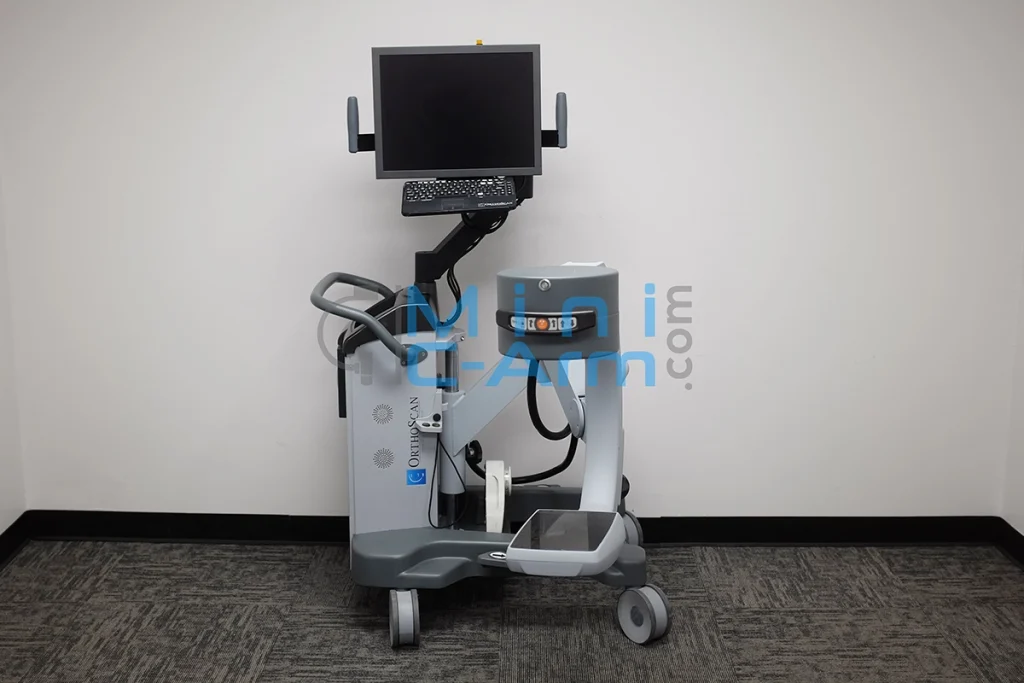
The Orthoscan FD Mini C-Arm is an excellent choice for healthcare facilities that need reliable extremity imaging without the added cost or complexity of advanced specialty features. It is best suited for environments where efficiency, consistency, and long-term value are the primary considerations.
The Orthoscan FD Mini C-Arm is ideal for:
- Outpatient surgery centers and ambulatory clinics performing routine extremity procedures
- Orthopedic and sports medicine practices requiring dependable imaging for fractures, injections, and follow-up exams
- Hospitals with general imaging needs that do not require advanced surgical or dose-reduction features
- Facilities with high daily case volumes or rotating staff, where ease of use and minimal training are important
- Veterinary clinics and animal hospitals performing orthopedic and extremity procedures, where compact design, reliable imaging, and straightforward operation support efficient care across a range of species
Clinicians benefit from the Orthoscan FD’s intuitive controls, lightweight maneuverability, and compact footprint, which make it quick to position and easy to operate in tight clinical spaces. Its flat detector technology delivers consistent image quality for common applications such as fracture reduction, joint injections, hardware checks, and post-procedure verification.
From an administrative perspective, the Orthoscan FD offers predictable performance and strong cost control. Its affordability, proven reliability, and straightforward service requirements make it a practical long-term solution for facilities seeking flat detector imaging without overinvesting in features designed for specialized surgical or dose-sensitive environments.
How to Decide Between the Orthoscan FD, FD-OR, and FD Pulse
Selecting the right Orthoscan mini C-arm depends on your facility’s imaging volume, workflow requirements, and long-term priorities. While all three models deliver dependable flat detector imaging, each system is designed to solve a different clinical challenge, ranging from everyday extremity imaging to optimized surgical workflows and advanced radiation safety.
Understanding how these models align with your typical procedures, staff usage, and patient population can help ensure you invest in the system that delivers the most value without unnecessary features. The breakdown below highlights which Orthoscan mini C-arm is best suited for specific environments and use cases.
- Choose the Orthoscan FD Mini C-Arm if you need a proven, cost-effective flat detector system for routine extremity imaging. It is ideal for outpatient clinics, surgery centers, and hospitals performing standard orthopedic procedures where reliability, ease of use, and value are the top priorities.
- Choose the Orthoscan FD-OR if your primary focus is intraoperative imaging and surgical workflow efficiency. Its ergonomic design, sterile-field controls, and OR-friendly footprint make it well suited for operating rooms and procedure suites where positioning and efficiency are critical.
- Choose the Orthoscan FD Pulse if radiation safety is a key concern and your facility performs frequent or extended imaging. Its pulsed fluoroscopy technology significantly reduces radiation exposure, making it the best option for high-volume, pediatric, teaching, or dose-sensitive environments.
Why the Orthoscan FD Mini C-Arm Remains a Smart Investment
The Orthoscan FD Mini C-Arm continues to serve as the reference point within the Orthoscan lineup. It delivers the essential imaging performance most facilities need while offering flexibility, reliability, and strong return on investment. For many healthcare providers, the FD represents the most practical entry point into flat detector mini C-arm imaging, while still allowing the option to upgrade as clinical demands evolve.
Frequently Asked Questions About the Orthoscan FD Mini C-Arm
What is the Orthoscan FD Mini C-Arm primarily used for?
The Orthoscan FD Mini C-Arm is primarily used for extremity imaging in orthopedic, sports medicine, veterinary and outpatient surgical settings. Common applications include fracture reduction, joint injections, hardware placement checks, follow-up exams, and other procedures involving the hands, wrists, ankles, feet (and paws), and elbows. Its flat detector technology provides clear, reliable images for routine imaging needs.
How does the Orthoscan FD compare to the FD-OR and FD Pulse?
The Orthoscan FD serves as the baseline flat detector model in the Orthoscan lineup. The FD-OR is designed for surgical environments, offering enhanced ergonomics and sterile-field workflow features. The FD Pulse adds pulsed fluoroscopy, significantly reducing radiation exposure for facilities that perform frequent or extended imaging. The best choice depends on whether your priority is value, surgical workflow, or radiation safety.
Is the Orthoscan FD Mini C-Arm suitable for surgery centers and outpatient clinics?
Yes. The Orthoscan FD is widely used in ambulatory surgery centers, outpatient clinics, veterinary offices and physician offices. Its compact footprint, lightweight design, and intuitive controls make it easy to position in tight spaces, while its image quality supports a wide range of routine orthopedic procedures.
How does the image quality of the Orthoscan FD compare to newer models?
The Orthoscan FD delivers high-resolution flat detector imaging. While newer models like the FD Pulse focus on radiation reduction, the FD’s image quality continues to exceed clinical needs for routine procedures without requiring additional features.
Does the Orthoscan FD support digital storage and PACS integration?
Yes. The Orthoscan FD is DICOM compliant and supports integration with PACS systems. Images can be stored digitally, exported via USB, and shared across hospital or clinic networks, supporting efficient documentation and workflow.
Is the Orthoscan FD Mini C-Arm a good option for budget-conscious facilities?
Absolutely. The Orthoscan FD is often chosen by facilities that want flat detector imaging performance without the cost of premium features. Its lower acquisition cost, proven reliability, and straightforward maintenance make it a strong long-term investment for clinics focused on value and predictable operating expenses.
When should a facility consider upgrading from the Orthoscan FD?
Facilities may consider upgrading to the FD-OR if surgical workflow efficiency is a priority, or to the FD Pulse if minimizing radiation exposure is critical due to high imaging volume or extended procedures. For routine extremity imaging, however, many facilities find the Orthoscan FD fully meets their needs.
Not sure which system is right for you? Explore our Complete Mini C-Arm Buyer’s Guide to compare models, features, and pricing.
One Response